
The Invisible Number: Why Your Credit Score Matters More Than You Think
26 June 2026
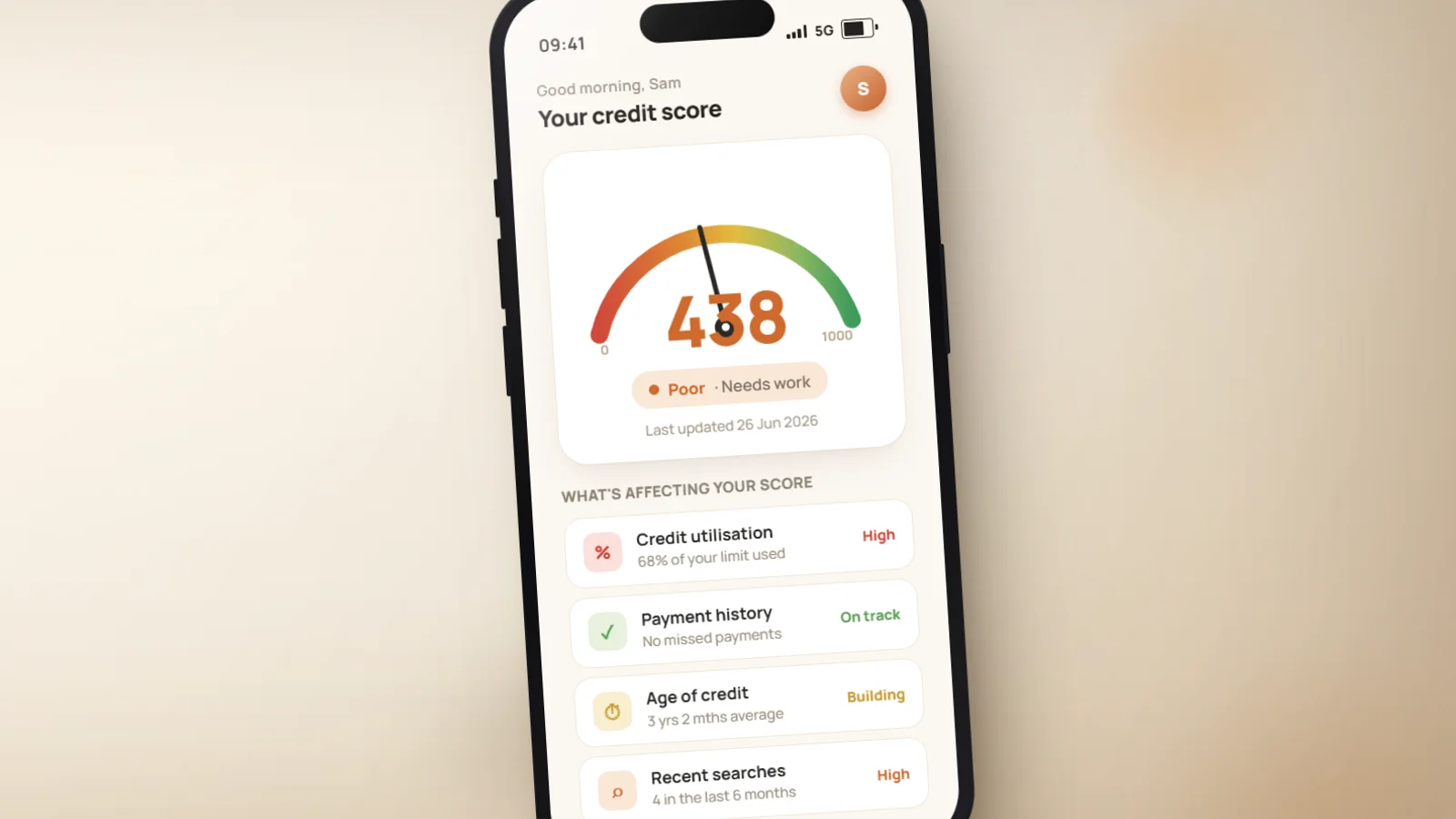
Most people don't think about their credit score until they need something: a mortgage, a car on finance, a new phone contract. By then, it's too late to fix it.
Your credit score isn't just a number. It's a financial reputation that's been building quietly in the background since the day you first opened a bank account. And for people in the forces, it's especially easy to let it drift into a mess without realising.
Let's fix that.
What Is a Credit Score, Actually?
In the UK, your credit score is calculated by three separate companies called Credit Reference Agencies (CRAs): Experian, Equifax, and TransUnion. Each one holds a slightly different picture of your financial history, because not every lender reports to all three.
The key thing to understand is that there's no single universal score. Each CRA uses its own scale:
- Experian: 0-1,250 (updated in late 2025)
- Equifax: 0-1,000
- TransUnion: 0-710
The numbers look wildly different, but they're measuring roughly the same thing: how likely you are to repay what you borrow. A lender checking you through Experian and a lender checking you through TransUnion are looking at the same underlying behaviour. They're just showing you different dials.
The scores you see on ClearScore, Credit Karma or Experian are educational scores. They give you a sense of where you stand. What matters to a lender is the raw data underneath: your payment history, your debts, your address history, how many applications you've made recently.
Why Forces Personnel Have It Harder
The credit system was built around one assumption: that you live in one place, you stay there, and your post goes to the same address indefinitely.
For serving personnel, almost none of that is true.
Address history is a massive factor for lenders. Multiple addresses over short periods, a barracks here, a married quarter there, a temporary posting somewhere else, reads badly on a credit file. Lender systems often can't even process a BFPO address properly, which means accounts registered there may not show up on your file at all.
Electoral roll registration is one of the single biggest drivers of a credit score. Most lenders use it as a basic identity check. If you're not on it, or you're registered at an address that doesn't match your accounts, your applications can be delayed or declined outright.
The fix is straightforward, but it requires a decision: pick one civilian address and stick to it. A parent's address, a partner's, a sibling's. Somewhere you have a genuine connection and can receive post. Register to vote there. Move all your financial accounts there. Everything in one place, one address, consistently used.
If you're registered as an overseas service voter and genuinely can't use a UK address, you can add a Notice of Correction to your credit file. It's a short statement of up to 200 words explaining your situation to lenders. It won't give you the same boost as being on the roll, but it stops the absence working against you.
What Actually Affects Your Score
The agencies don't publish their exact formulas, but the key factors are well understood:
Payment history is the biggest one. Every missed payment, late payment, or default leaves a mark that stays on your file for six years. One missed payment can drop your score by 50-100 points. Set up direct debits and forget about it: the minimum payment on every account, always, automatically.
Credit utilisation is how much of your available credit you're using. If you have a £3,000 limit and you're carrying £2,500, that's 83%. Lenders hate it. Keep it under 50%. Ideally under 30% if you're planning a big application like a mortgage.
Electoral roll registration. Already covered. Just do it.
Length of credit history. Older accounts carry more weight. A credit card you've had for five years and never missed a payment on is worth more than one you opened six months ago. Don't close old accounts just because you don't use them.
Recent applications. Every time you formally apply for credit, a "hard search" is recorded on your file and is visible to lenders. A string of applications in a short period looks like financial stress. Use eligibility checkers, like the one on ClearScore, before you apply. Soft searches don't leave a mark.
Defaults and CCJs. A County Court Judgment stays on your file for six years, unless you pay it in full within 28 days of issue, in which case it can be removed entirely. If you've got any old debts hanging around, deal with them.
How to Check Yours, For Free
You don't need to pay to see your credit score. All three CRAs offer free access:
- ClearScore - free Equifax score and full report, no trial period, no card required
- Credit Karma - free TransUnion score and full report
- Experian - free basic score via their app or website
Check all three. Different lenders use different agencies, and errors on one file can affect an application the others wouldn't have flagged.
Checking your own score is a soft search. It's invisible to lenders and has zero impact on your score. Check as often as you like.
Building From Scratch (or Rebuilding After a Mess)
If you've got a thin file, no real credit history, or you've had problems in the past, the path is the same. It just takes a bit of time.
Credit builder cards are designed for this. They typically have low credit limits and higher interest rates, but that doesn't matter because you're not using them to borrow. You're using them to demonstrate behaviour. Spend a small amount each month. Pay the full balance by direct debit. Repeat.
A year of that, consistently, builds more trust than anything else.
Get on the electoral roll. Still the fastest single thing you can do. Up to 50 points, within a month or two of registering.
Fix your address history. If your accounts are scattered across three different addresses, consolidate them. It won't happen overnight, but a clean, consistent address history works in your favour over time.
Check your file for errors. Wrong address, an account that isn't yours, a default that's been applied incorrectly. Errors happen. Each CRA has a dispute process. Fix them.
The Long Game
A credit score isn't something you manage once. It's something you maintain. The good news is that the habits that build a good score, paying on time, keeping utilisation low, not making unnecessary applications, are the same habits that make you genuinely better off financially.
The mortgage you want in five years, the car deal you'll negotiate when you leave, the best balance transfer rates when you need them. All of it gets cheaper when your score is working for you.
Start now, while the stakes are low. By the time you need it, it'll be ready.
Check your score for free at ClearScore (Equifax), Credit Karma (TransUnion) or Experian. All three, no card required.
Educational Disclaimer
StandEasy Finance provides free educational guides and information for the UK Armed Forces. We do not provide regulated financial advice. If you click on some links within this article, we may receive a commission from the provider. Always do your own research or seek independent financial advice if you are unsure.